Double Standards (specifically gender) in the Media: A Lesson
Lesson Introduction
When thinking of a potential topic to teach to the class, I contemplated various topics because I wanted to make sure it was something I thought was…
1. something I was genuinely interested in
AND
2. something important for the class to know
After brainstorming, I finally decided to “teach” about double standards in the media, specifically gendered double standards. Personally, as I continue to consume media on a daily basis, I have increased my awareness of the double standards that surround women, especially whenever I am scrolling on social media. Therefore, I believe this is a topic that I am genuinely interested in both learning and eventually teaching as well as something that we could all benefit from learning. After all, it’s pretty likely that media will continue to be a massive part of society, so the best we can do is gain awareness, spread learning, and make a change.
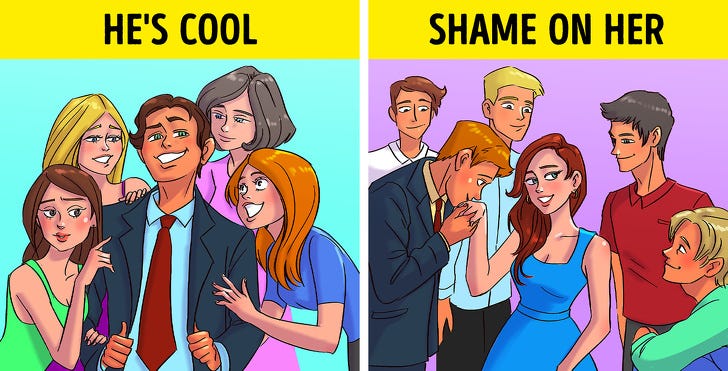
Lesson Plan
1. Classroom Context:
What do you imagine the class already knows about your topic before you begin? How will you get their attention and interest?
Before I begin, I imagine most of the class may already know of some instances of double standards in the media. Having had previous discussions with my classmates on similar topics, I assume that they would be familiar with some of the examples I will discuss or at the very least have an awareness that there are many double standards expressed in today’s media. I will get their attention and interest firstly with a bright colored visual powerpoint, as well as by introducing my topic with questions that encourage them to come up with examples they have personally seen. Through this, my classmates will hopefully begin to realize the prevalence of double standards in the media.
2. Lesson’s Content:
What is your lesson about? This might be very similar to the introduction you write for your blog post, in which you introduce the lesson to the class.
This lesson is about exploring the concept of double standards, specifically between men and women, in the media through the facets of pop culture and politics. While there are double standards for both men and women, double standards often manifest in the ways in which women are negatively portrayed and judged in comparison to men. I find that the subcategories of pop culture and politics typically perpetrate double standards in instances such as the Selena Gomez versus Hailey Bieber debacle or the national reaction of Kamala Harris’ debate with Mike Pence. This lesson will examine various instances and discuss the problematic narratives that are constantly being maintained in society.
3. Lesson Objective:
What do you hope to achieve with your lesson? Be specific: what will we all know or be able to do when you finish that we didn’t know before you began.
Through examination of real-life examples, this lesson aims to bring awareness and understanding of the harm that double standards in the media can produce in society. Additionally, learners will be more inclined and knowledgeable about how to recognize double standards in media and other domains of society like workplace, parenting, and more. Learners will be able to analyze instances of double standards and form connections with potential harm. For example, connecting the Sabrina Carpenter/Olivia Rodrigo love triangle drama with potentially reinforcing the shaming of women in gullible youth.
4. Lesson Rationale:
Why is this lesson important? Situate your topic in terms of your own personal interest (is it related to your intended major? To your favorite hobby?) and also in terms of its relation to the other, connected topics and ideas. How does your topic connect to other things we should or do know?
This lesson is important because I sometimes find myself unknowingly feeding into double standards without even realizing the consequences of it. With social media becoming more and more present in a majority of people’s lives, it is vital that we become more aware of said double standards to ensure ourselves and future generations are not continuing the pattern. While I wouldn’t consider it a hobby, this topic is of personal interest because I am an active consumer of pop culture and have an (arguably) unhealthy amount of knowledge in this realm. Double standards as a topic can be widely related and connected to other topics as it is present in nearly all areas of life, including relationships, workplaces, sports, and many more. I chose to focus on double standards in men versus women, though there are pronounced double standards in other groups such as race or ethnicity.
Preparation for Class!
Before the lesson, I think it’d be beneficial to read a quick and easy article by BuzzFeed followed by watching this short advertisement. I hope doing this will give you a basis of double standards in men versus women before we dive into the media realm. Heads up- I will be asking if anyone wants to share a standard with the class (whether it is something you have experienced or something surprising!).
Firstly, here is the Buzzfeed article that points out numerous double standards that are present in society today. I’d like to point out that while there are standards for both men and women mentioned, there is one gender that has much more standards mentioned.
Take a read: “19 Gender Double Standards That Remind Me How Much Toxic Masculinity Destroys Society”
Then, watch this short advertisement by Pantene that (surprisingly) shines light on the double standards that women experience on a daily basis.
This advertisement is a great representation of how media can be utilized to bring attention to and call out gendered double standards rather than continuing to enforce them.
That’s all! See you on Tuesday 🙂


Leave a Reply